How the Moon Affects Tides & Fishing
A Fisherman's Guide to Reading Lunar Tides for Better Catches
Every experienced angler knows the frustration: you hit your favorite spot at what you thought was the "right" time, but the fish just aren't biting. Meanwhile, the guy who was there two hours earlier is posting one redfish after another on Instagram. What's his secret? Chances are, he's super lucky or he understands something you might be overlooking — where we are right now on the tide table.
For the rest of this article I'm going to take it back to 6th grade science test because it is a great reminder of how the moon is impacting tidal movement and triggering the the fish to bite or just laugh at you. If this is obvious for you already, then you are already ahead of 90% of the "cast and pray" fishing public. If not, a good background is always helpful so let's get to it.
The moon sitting 238,900 miles away might seem irrelevant when you're hooking up the trailer at 5 AM, but its gravitational pull is quietly orchestrating the tidal movements that determine whether you're going to have a great day catching fish or just a great day enjoying being on the water.
Let's break down the science in plain terms, then get to what you really care about — how to use this knowledge to catch more fish.
Why Moving Water Means More Bites
Before we dive into the moon science, here's the fundamental principle every fisherman needs to understand: fish feed when water moves. There are always exceptions so save the comments, we are talking higher proabability here. Tidal movement stirs up baitfish, shrimp, crabs, and other prey. It pushes food into ambush points where gamefish wait. It flushes nutrients through channels and creates current seams where predators stack up.
Slack tide — that dead period when the water stops moving between high and low — is often the slowest fishing of the day. The bite typically picks up an hour or two before and after the tide changes, when current is flowing strongest. If it's slack, use that time to eat a sandwhich or make a run to the next spot.
The 2-Hour Rule: Many experienced anglers swear by fishing the two hours before and after a tide change. This "moving water window" often produces the most consistent action, especially for species like striped bass, redfish, snook, and tarpon that ambush prey in current.
Now, let's look at what's actually causing those tides.
The Basics: How the Moon Creates Tides
The moon's gravitational pull creates bulges in Earth's oceans — one on the side facing the moon, and surprisingly, another on the opposite side. These bulges are your high tides. The areas between them? Low tides.
Here's the part that trips people up: how does gravity create a bulge on the far side of Earth, away from the moon? Think of it this way — the moon pulls hardest on the water facing it, pulling it toward the moon. But the moon also pulls Earth's core toward it, leaving the water on the far side "behind," creating a second bulge.
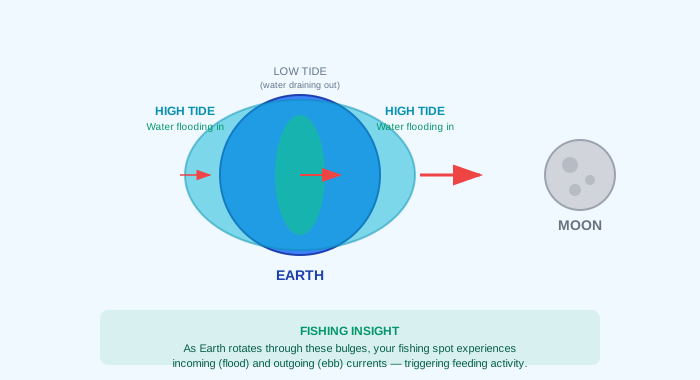
As Earth rotates, your fishing spot passes through these bulges roughly every 12 hours and 25 minutes. That's why most coastal areas see two high tides and two low tides each day — and why savvy anglers plan their trips around these movements.
Why Tides Shift 50 Minutes Later Each Day
If you've ever wondered why the tide times on your chart shift by about 50 minutes each day, here's your answer: the moon is also orbiting Earth in the same direction our planet spins. Your fishing spot needs an extra 50 minutes each day to "catch up" with where the moon has moved.
Planning tip: If today's incoming tide hits your spot at 6 AM and the bite is on fire, tomorrow it'll be around 6:50 AM (or not, these are fish we are talking about). Plan your trips accordingly for your best shot.
Spring Tides vs. Neap Tides: Which Is Better for Fishing?
Here's where it gets interesting for anglers. The sun also exerts gravitational pull on Earth's oceans — not as strong as the moon (about 46% of its effect), but enough to matter. When the sun and moon work together, you get dramatically different tides than when they work against each other.
Spring Tides: Big Water Movement, Often Big Bites
During new moons and full moons, the sun and moon line up, combining their gravitational pull. The result? Spring tides — the highest highs and lowest lows of the month. Despite the name, these have nothing to do with the season (the term comes from water "springing forth").
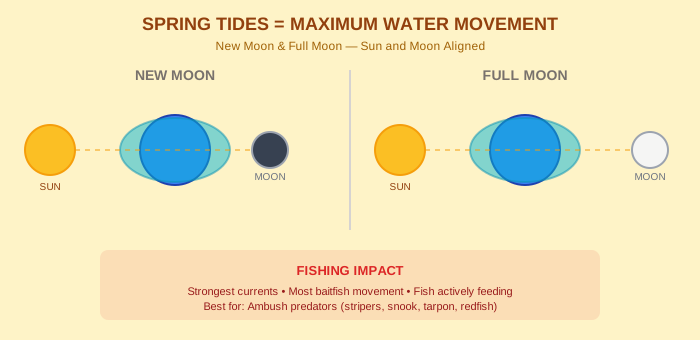
For many anglers, spring tides mean prime time. The stronger currents flush more bait through channels and over flats. If you're fishing Tampa Bay during a spring tide, the passes and bridge pilings come alive with snook and tarpon stacking up on current edges. Ambush predators like striped bass, snook, and tarpon position themselves at current edges, structure, and pinch points where prey gets concentrated. The increased water movement can trigger aggressive feeding.
Spring Tide Strategy: During spring tides, focus on current edges, bridge pilings, points, and anywhere structure creates a "funnel" for moving water. Gamefish stack up in these ambush spots. The downside? Stronger currents can make boat positioning trickier, and some shallow flats become too deep to wade effectively at high tide.
Neap Tides: Subtle Movement, Different Opportunities
During first quarter and third quarter moons, the sun and moon are at right angles to Earth. Their gravitational pulls partially cancel each other out, creating neap tides — the smallest tidal range of the month. High tides aren't as high, low tides aren't as low, and current is weaker.
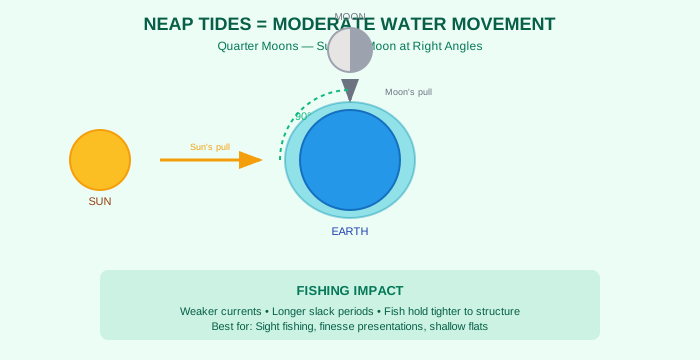
Does weaker current mean worse fishing? Not necessarily — it just means different fishing. Neap tides can be great for sight-fishing on shallow flats, where less movement improves visibility. Fish tend to hold tighter to structure during neap tides also rather than actively patrolling current edges. Finesse presentations often outperform power fishing during these periods.
Neap Tide Strategy: During neap tides, slow down your approach. Fish aren't getting as much food delivered by current, so they're often more willing to chase or inspect a well-presented bait. Focus on:
- Sight fishing on clear flats
- Working structure slowly and thoroughly
- Using lighter leaders and more natural presentations
- Fishing longer into slack tide (the "dead" period is shorter)
The Complete Moon Phase Fishing Calendar
Here's how the entire lunar cycle affects your fishing opportunities:
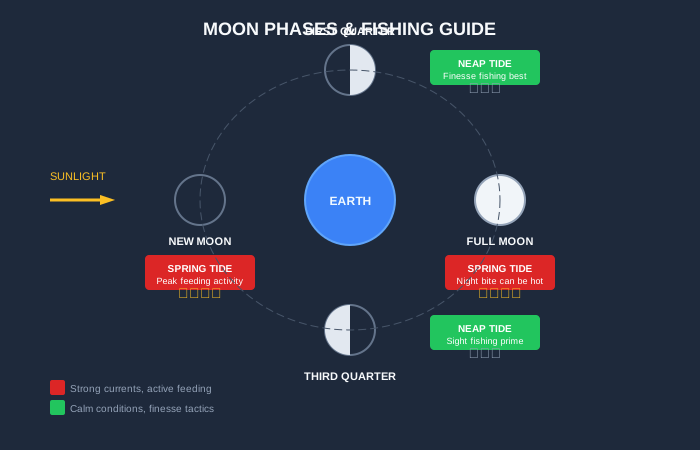
- New Moon — Spring tide. Peak feeding activity. ★★★★
- First Quarter — Neap tide. Finesse fishing best. ★★★
- Full Moon — Spring tide. Night bite can be hot. ★★★★
- Third Quarter — Neap tide. Sight fishing prime. ★★★
Tidal Phases: When Fish Actually Bite
Understanding spring vs. neap tides tells you which days to target. But when during the day should you be on the water? Here's what experienced anglers know about each tidal phase:
| Tidal Phase | What's Happening | Fishing Quality | Best Approach |
|---|---|---|---|
| Incoming (Flood) | Water rising, current pushing into bays and flats | ★★★★ HOT | Fish ambush points where bait gets pushed through |
| High Slack | Water stops moving at peak high tide | ★★ FAIR | Fish structure and deeper holes; slow presentations |
| Outgoing (Ebb) | Water dropping, current draining from flats | ★★★★ HOT | Target creek mouths, cuts, and drains where bait funnels out |
| Low Slack | Water stops moving at lowest point | ★★ FAIR | Fish deeper channels and holes where fish concentrate |
| First Hour of Change | Current just starting to move | ★★★ GOOD | Great transition period — fish starting to reposition |
| Peak Current | Strongest water movement (mid-tide) | ★★★★ HOT | Maximum bait movement; predators actively hunting |
The "Last of the Outgoing" Secret: Many guides consider the last two hours of an outgoing tide — especially on spring tides — to be the most productive window of all. As water drains from shallow flats, baitfish, shrimp, and crabs get concentrated and funneled through creek mouths and cuts. Predators know this and stack up waiting for an easy meal. Position yourself at these "drain points".
Other Factors That Affect Tides (and Your Fishing)
The moon is the primary driver, but other factors influence what tides you'll actually see:
- Moon distance (Perigee): When the moon is closest to Earth in its elliptical orbit, tidal ranges are amplified. A full or new moon at perigee creates "king tides" — the most extreme tides of the year. These can produce exceptional fishing but also flood areas that are normally dry.
- Local geography: Funnel-shaped bays amplify tides dramatically. The Bay of Fundy sees 50+ foot tides! Meanwhile, Charleston sees tidal ranges of 5-6 feet, while Key West barely registers a foot of swing. Know your local waters and how the moon phase amplifies or diminishes the tides where you fish.
- Wind: Strong onshore winds can push water levels higher than predicted. Offshore winds do the opposite. Always factor wind into your tide planning — a strong northeast wind during an outgoing tide might keep water levels higher than the chart suggests.
- Weather systems: Low-pressure systems (storms) raise water levels; high-pressure systems lower them. Tracking barometric pressure helps you anticipate these shifts. Combine a low-pressure system with a spring high tide, and you may see flooding in areas that are normally fishable.
Putting It All Together: Your Fishing Game Plan
Here's how to use everything you've learned to catch more fish:
- Check the moon phase. New and full moons (spring tides) mean maximum current and often peak feeding. Quarter moons (neap tides) favor calmer conditions and different tactics. You can also look at tide coefficient to quickly gauge how strong the tides will be.
- Time your trip around moving water. Plan to be fishing during the two hours before and after tide changes — not during slack water. Combine this with major and minor feeding times for the best possible windows.
- Match your approach to conditions. Strong current? Fish ambush points and current edges. Weak current? Slow down, work structure, try finesse presentations.
- Factor in local conditions. Wind, weather, and geography all affect what actually happens at your spot. Use the tide chart as a starting point, not gospel.
- Keep a log. Over time, you'll notice patterns at your specific fishing spots. Maybe the outgoing tide always outproduces the incoming at your favorite creek. That kind of local knowledge is priceless.
Key Takeaways for Fishermen
- Moving water = feeding fish. Plan your trips around incoming and outgoing tides, not slack periods.
- New and full moons create spring tides with maximum current and often the best fishing.
- Quarter moons create neap tides — calmer water that favors sight fishing and finesse tactics.
- Tides shift ~50 minutes later each day, so your hot bite window moves with them.
- The last 2 hours of outgoing tide is often prime time, especially at creek mouths and cuts.
- Local knowledge matters. Learn how tides affect YOUR spots specifically.
The moon has been orchestrating this show for billions of years. Now that you understand the rhythm, you can use it to your advantage. Tight lines out there.
Check Your Local Forecast
See how today's moon phase is shaping the tides at your fishing spot. Check the forecast for Key West, FL, Charleston, SC, Tampa, FL, Jacksonville, FL, or Naples, FL to see current moon phase, tide charts, and feeding times — everything you need to plan your trip around the lunar cycle.
Related Articles
- Major and Minor Feeding Times for Fishing
- What Is Tide Coefficient?
- How Tide Stations Work
- How Barometric Pressure Affects Fishing
Check Today's Forecast
Ready to plan your next trip? Check My Marine Forecast for your fishing day's tides, moon phase, and wind forecast to find your best fishing window.